 ARCTIUM ENERGY COMPANY
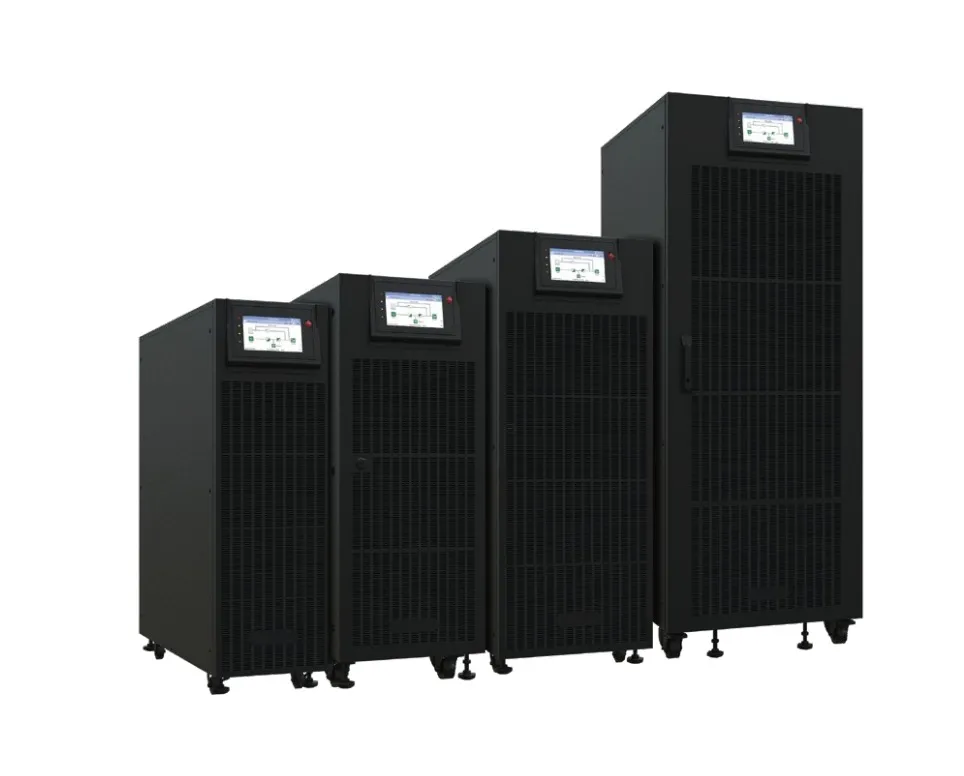
 Arctium PowerGuard 3300 Series
Arctium's flagship 3-phase UPS, built for data centers, industrial plant rooms and large commercial buildings — online double-conversion protection from 10 to 100 kVA on a single platform.
Built to scale with the facility
Online double conversion with dual-DSP control, a wide input voltage window, and unity output power factor — the same platform architecture from a single server room to a full data centre.
10–20 kVA band
YDC3310 · YDC3315 · YDC3320 — up to 4 units in parallel.
25–100 kVA band
YDC3325 through YDC33100 — up to 6 units in parallel, 3-level inverter topology.
- Online double conversion with dual-DSP control
- N+X parallel redundancy with load bus sync (LBS) between banks
- Wide input voltage window — no generator derating surprises, generator-compatible
- 2.4" TFT + optional 7" full-color touchscreen HMI
- Unity (1.0) output power factor — full rated kW is usable power
- ECO mode (up to 99% efficiency) & battery self-aging "green test"
- Smart charging: up to 20A (10–20kVA) or up to 80A (25–100kVA)
- Comprehensive comms: USB, RS232, RS485, SNMP, dry contact
Bypass reverse-feed protection
Isolates the bypass input automatically if the mains-side circuit fails, preventing backfeed injuries during servicing.
Black-box fault recording
Captures the last events — input/output/bus voltage, current — for fast root-cause diagnosis.
External maintenance bypass
Standard maintenance switch linkage lets technicians service the unit without dropping the load.
Where PowerGuard 3300 earns its place
Data centers & server halls
Zero-transfer-time protection for racks, storage arrays and network cores.
Industrial plant & process rooms
Rides through sags and outages on PLCs, control rooms and process lines.
Large commercial & institutional buildings
Keeps elevators, access control, lighting circuits and IT running.
One partner for power
Pair PowerGuard with an Arctium BESS for extended runtime, peak shaving and demand-charge management under one design.
10–20 kVA Band
S = standard unit with internal battery · H = long-run unit, external battery not included
| Model | YDC3310 S/H | YDC3315 S/H | YDC3320 S/H |
|---|---|---|---|
| Capacity (kVA/kW) | 10 / 10 | 15 / 15 | 20 / 20 |
| Max Parallel Units | 4 | ||
| Input Nominal Voltage | 208/120 or 220/127 Vac (3Ph+N+PE) | ||
| Input Voltage Range | 96–159 Vac (100% load) · 72–159 Vac (50% load) | ||
| Input Power Factor | ≥ 0.99 · THDi ≤ 2% | ||
| Output Nominal Voltage | 208/120 or 220/127 Vac (3Ph+N+PE), ±1% regulation | ||
| Output Frequency | 50/60 Hz ±0.1% (battery mode); crest factor 3:1 | ||
| Overload | ≤110% 60 min · ≤125% 10 min · ≤150% 1 min · >150% to bypass immediately | ||
| Max Efficiency (AC mode) | Up to 94% | ||
| Battery Type | VRLA, maintenance-free | ||
| Noise Level | <55 dB (S) · <58 dB (H) | ||
| Dimensions W×D×H | 250 × 900 × 868 mm | ||
| Weight (S / H) | 136 kg / 77 kg | 188 kg / 78 kg | 239 kg / 79 kg |
| Standards | UL 1778, CSA C22.2 No.107.3-14, FCC Part 15 Subpart B, ANSI C63.4-2014 | ||
25–100 kVA Band
3-level inverter topology · S = standard unit, H = long-run unit
| Model | 3325 S/H | 3330 S/H | 3340 H | 3350 H | 3360 H | 3380 H | 33100 H |
|---|---|---|---|---|---|---|---|
| Capacity (kVA/kW) | 25/25 | 30/30 | 40/40 | 50/50 | 60/60 | 80/80 | 100/100 |
| Max Parallel | 6 units | ||||||
| Input Nominal | 208/120 or 220/127 Vac (3Ph+N+PE) | ||||||
| Overload | ≤110% 60min · ≤125% 10min · ≤150% 1min · >150% 1.2s to bypass | ||||||
| Max Efficiency | Up to 94% (AC mode) | ||||||
| Noise Level | <58dB | <60dB | <63dB | <65/66dB | <68dB | ||
| Weight | 375/95kg | 380/96kg | 150kg | 160kg | 165kg | 283kg | 321kg |
| Standards | UL 1778, CSA C22.2 No.107.3-14, FCC Part 15 Subpart B, ANSI C63.4-2014 | ||||||
Parallel & Load Bus Sync (LBS)
Up to 6 units in parallel per bank, with LBS linking two independent UPS banks for site-wide redundancy.
Battery voltage flexibility
16–26 battery blocks selectable per string to balance runtime against footprint and budget.
Ready to specify PowerGuard 3300?
Send your load requirements, single-line diagram or existing panel schedule — standalone, or paired with an Arctium BESS.