 ARCTIUM ENERGY COMPANY
 Hydrogen from an abundant mineral
A proprietary mineral reactor that generates hydrogen continuously. The fuel ships as ordinary solid cargo; the byproduct is recycled back to the source mineral.
A logistics problem before it is an energy problem
Metal to hydrogen, in four steps
Proprietary mineral fuel-blend pellets are charged into the reactor. Stable, non-pressurised, shippable as ordinary cargo.
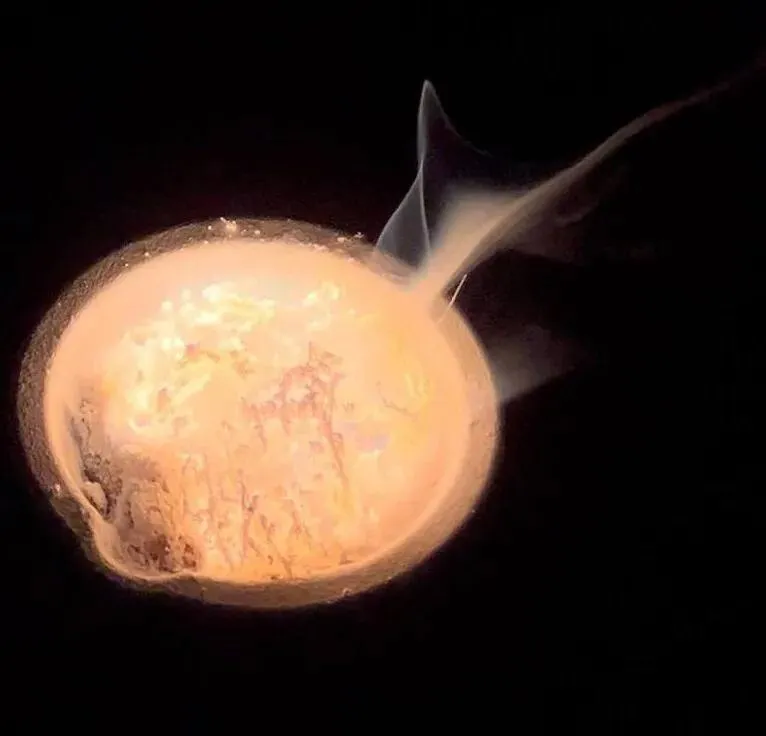
The charge is superheated and enters the molten phase in which the reaction runs.
Water contacts the molten charge and hydrogen is liberated from it.
Hydrogen and usable heat come off continuously; the oxidised byproduct is collected for recycling back to the source mineral.
Byproducts are recycled back to the source mineral at under roughly 20 cents per kilogram — a circular process rather than a fuel you keep buying.
Why this differs from the other clean options
Simple logistics
Solid pellets, no pressurised gas, no cryogenics, no tank weight.
No central processing
Generation happens where the power is consumed.
Positive net energy
Unlike electrolyser-and-fuel-cell chains.
Serviceable
A thermochemical reactor with few moving parts.
Scalable
Output follows the charge rate; capacity is added in units.
Small footprint
Fits where a genset already sits.
Against everything else on the table
| Technology | Cost per kWh | Energy density | CO₂ |
|---|---|---|---|
| Arctium mineral thermochemical H₂ | $0.102 – 0.139 | 3.31 / 6.38 kWh/kg | Neutral |
| Diesel generators | $0.15 – 0.57 | 12 kWh/kg | High |
| Natural gas | $0.05 – 0.10 | 13 kWh/kg | High |
| Solar PV (utility) | $0.05 – 0.28 | — | Zero |
| Wind | $0.04 – 0.09 | — | Zero |
| Hydroelectric | $0.05 – 0.12 | — | Low |
| Battery storage | $0.15 – 0.30 | — | Zero |
Arctium internal analysis. The mineral thermochemical figure assumes 90% efficiency with 10% heat recovery. Comparator ranges are indicative and vary by jurisdiction, resource and site.