 ARCTIUM ENERGY COMPANY
Add heat pumps without waiting on a service upgrade.
A battery can hold your grid import below the service limit, so new HVAC load fits the service you already have.
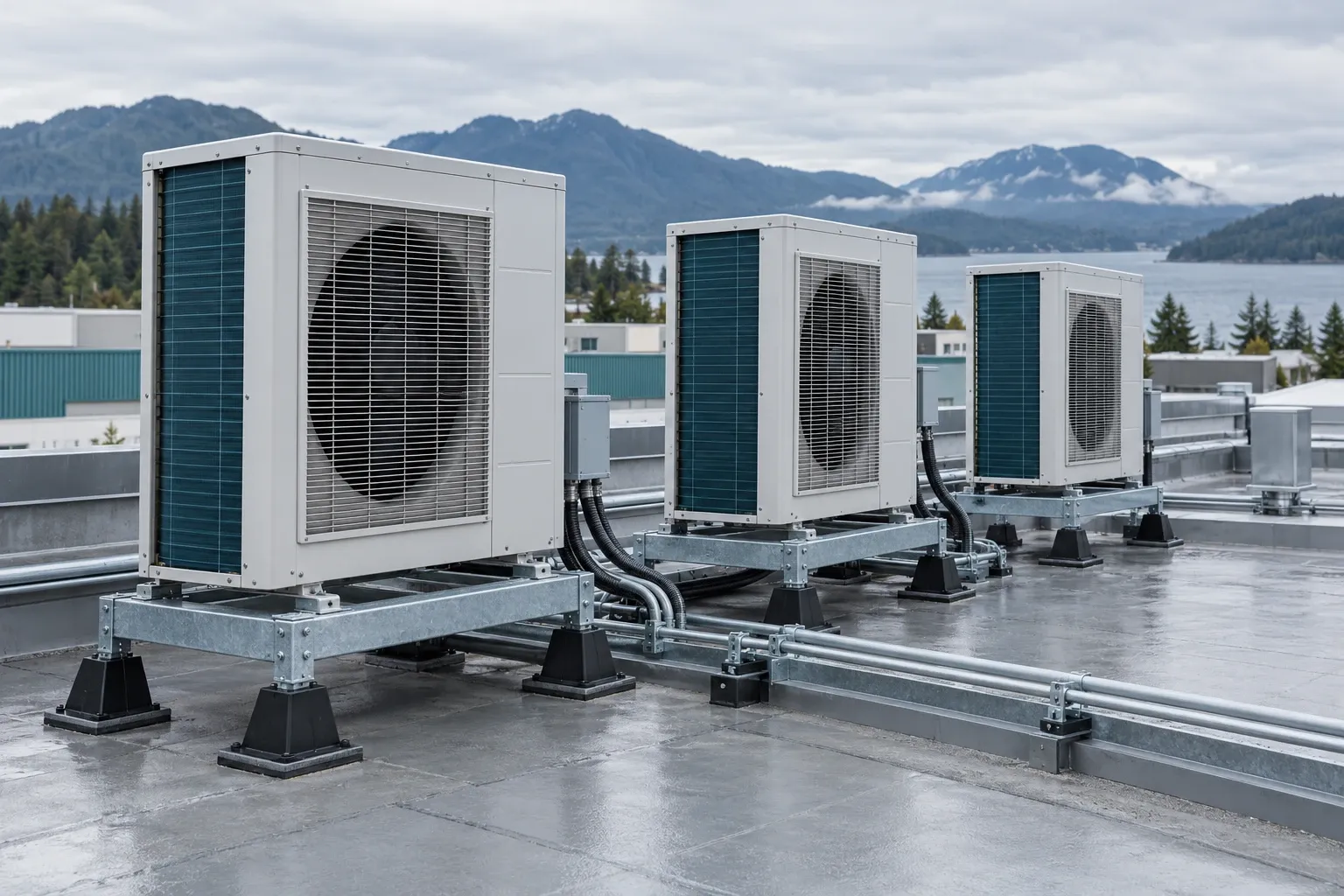
A site that adds heat pumps, rooftop units, or chillers can exceed its electrical service. The usual fix is a BC Hydro upgrade, which costs money and can take months. A battery can cover the gap by supplying the peak, so the grid never sees it. The same battery can lower demand charges. BC Hydro's Energy Storage Incentive may also pay up to 80% of the eligible battery cost.
How it works
The battery charges when site load is low.
The EMS watches total site load against an import limit.
When load would pass the limit, the battery discharges into the building.
Grid import stays below the limit. The new equipment runs normally.
Why heat pumps suit this
Heat pump load is not flat. The peaks are short and predictable.
- Compressor starts draw a brief surge.
- Defrost cycles add a short spike.
- Cold mornings stack several units at once.
A battery handles short peaks well. That is what it is built for.
Lower bills too
BC Hydro bills commercial accounts on the highest 15-minute draw each month. The same battery that holds the import limit also trims that peak.
See how demand charges work and the results at our Burnaby project.
The battery costs less than you think: BC Hydro covers up to 80% through ESI
BC Hydro's Energy Storage Incentive can pay up to 80% of the eligible cost of a behind-the-meter battery. In return, BC Hydro can dispatch part of the battery for 10 years. The rest stays yours for peak shaving and import limiting.
Service upgrades are not an eligible cost. The incentive applies to the battery itself. Eligibility depends on your rate class, a minimum of 25 kW nominated, and pre-approval before you buy. Read our ESI Guide for the full terms.
Where it fits, and where it does not
A battery works when the extra load is peaky and the energy needed is modest. It does not replace an upgrade when new load runs high for long hours. Battery size depends on how much power you need to cover and for how long.
Sizing takes real load data. We check it before we recommend anything.
Load passes the limit briefly. The battery covers each peak and grid import stays at the limit.
Load stays above the limit. The battery runs out and grid import passes the limit.
What we need to assess a site
- 12 months of interval data
- The site single line diagram, if you have one
- Planned new loads, in kW or amps
- Existing service size
For consultants and designers
We work with design teams early. Send us the load list and we will tell you whether a battery fits, with or without the incentive.
Drawings are conceptual reference material and not for construction.